Boots, Bibs and Background Checks: The Pre-Course Bill Facing East London Learners
You have found the course. You have checked the start date, the funding and whether the timetable fits around work. Then the enrolment pack lands, and there is a line you did not see on the course page: learners will need to supply their own safety boots, chef whites or salon kit.
That gap between the listing and the letter is where plenty of East London learners get caught out. Vocational courses are practical by design, but the practicalities often come with a shopping list. None of this is a reason to walk away. It is a reason to ask better questions before you commit.
The listing says basic kit. The letter says something else.
Course pages are written to sell the qualification. They tell you what you will learn, how long it takes and whether you can get funding. They are less reliable when it comes to the exact items you need to turn up with. A line like basic kit required can mean a pair of steel-toe boots and a hi-vis vest. It can also mean a full tool roll, a uniform, a portfolio folder and a DBS check.
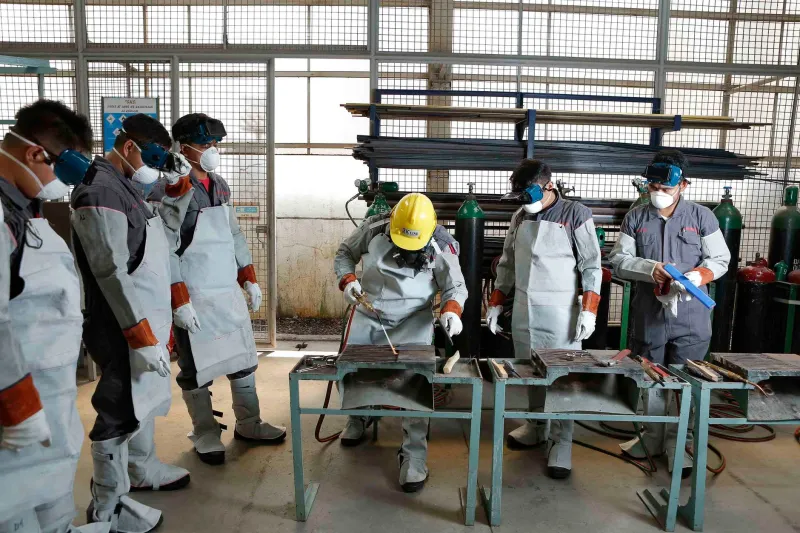
Construction and trade courses are the obvious example. Boots, goggles, gloves and a hi-vis top are standard. Some providers add their own branded workwear or a specific tool list. Catering courses often expect chef whites, safety shoes, a knife roll and a thermometer. Hair and beauty courses can come with a kit list that runs from scissors and brushes to towels and sanitising products. Health and social care courses may require a uniform and an enhanced DBS. Childcare settings will usually ask for a DBS too.
The course page might mention these. It might not. The enrolment letter usually does, but by then you may have already sorted funding and turned down other options.
Where the money actually goes
The total is rarely one big purchase. It is lots of smaller ones. PPE and clothing: safety boots, trousers, tunics, aprons, chef whites. Tools and consumables: knives, scissors, combs, brushes, measuring tapes, testers, folders. Admin: DBS checks, sometimes a uniform deposit or ID badge. Then the less obvious stuff: printing, travel to a kit supplier, replacement items when something breaks or runs out.
A pair of decent safety boots might cost £30 to £80. Chef whites and safety shoes can easily add £50 to £100. A basic salon kit can run from £80 to £200 depending on the course. A DBS check has its own fee, and some providers add an admin charge on top. None of these figures are designed to scare you. They are there so you can put a realistic number in your budget rather than discovering it in week one.
The timing matters too. If you leave kit buying until the week before enrolment, you may pay full price and rush. If you ask at application stage, you have time to compare, borrow or apply for help.
The items nobody puts on the list
There are always a few extras. Plain black trousers that are smart enough for a salon but tough enough for a workshop. Sensible shoes that turn out to mean safety footwear. A laptop or tablet for the online part of a course. A memory stick. Printing credit. A folder for assessments. Travel money for a placement that starts before your usual bus route is running.
For parents, there is the childcare question. Kit collection or an extra induction session can fall on a day when childcare is already stretched. For anyone working shifts, a midweek appointment to get measured for uniform can be a real cost in unpaid time.
These are not glamorous costs. They are also not imaginary. A good provider will tell you about them upfront. A less organised one may assume you already know.
Ask these questions before you pay
You do not need to be awkward. You just need the full picture. Ask for the kit list in writing before you accept a place. Ask whether any items are included in the course fee. Ask if the provider sells kit at cost or has a recommended supplier. Ask whether there is a loan scheme, a bursary or a hardship fund that covers equipment as well as fees. Ask whether you can use boots or tools you already own, provided they meet safety standards. Ask when the DBS check needs to be done and who pays for it.
If you are enrolling on a Skills Bootcamp, ask specifically what is included. Some bootcamps provide equipment or a kit allowance. Others do not. The answer can change the value of the course quite a lot.
If you are an apprentice, remember that your employer should provide the PPE you need for the job. That does not always cover college kit, but it is worth clarifying who buys what.
Bursaries, loans and local reuse
The 19+ Advanced Learner Loan can help with course fees, but it is not a kit fund. College bursaries and discretionary support funds are more likely to help with equipment, travel or childcare, though the pots are limited and the criteria vary. Ask the learner support team, not just the admissions team. They are usually the ones who know what is actually available.
Local reuse is worth a look too. East London has a strong second-hand economy. Community groups, charity shops, tool libraries and neighbourhood apps often have safety boots, chef whites, folders and tools that are barely used. Some colleges run kit swaps or sell donated items at the start of term. It is always worth asking.
Be careful with safety items. Second-hand boots and helmets should only be used if they are in good condition and meet the relevant standard. Do not compromise on PPE to save a few pounds. For non-safety items like folders, aprons or practice kits, reuse makes obvious sense.
The bottom line
Kit costs are part of the cost of training. They should be in the same conversation as fees, funding and timetable. If a provider cannot tell you what you need until the first day, that is a warning sign. If they can tell you, give you a realistic figure and point you towards support, that is a good sign.
Before you enrol, make a simple list: what you already own, what you need to buy, what you might borrow and what you can ask for help with. Then put a number next to it. It is better to spend an hour on that now than to spend the first week of term wondering how you are going to afford a pair of boots.
East End Training Hub covers vocational routes across East London, from Stratford and Hackney to Barking and beyond. The courses are real. So are the costs. Budget for both.