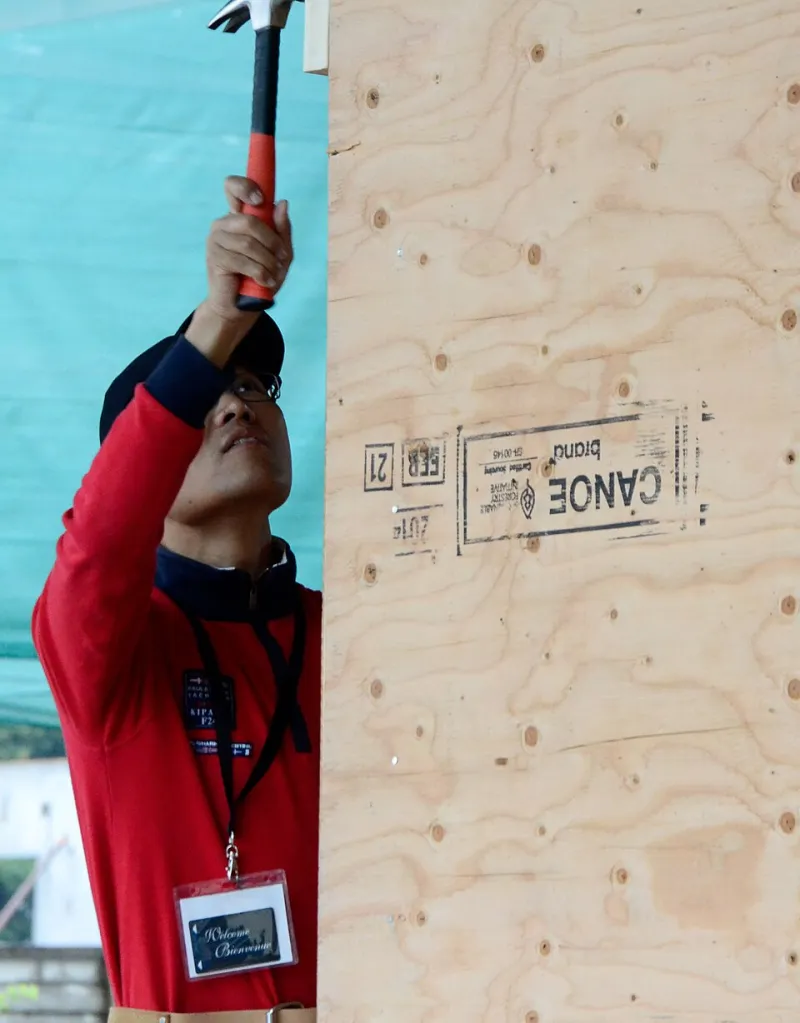
Heritage Stone, Rooftop Salad and E-sports: Five East London Careers Hiding in Plain Sight

Photo: Scotch Mist, CC BY-SA 4.0, via Wikimedia Commons
Ask a room of sixteen-year-olds in Tower Hamlets what a vocational job looks like and you'll get the familiar list: builder, electrician, mechanic, maybe a chef. All good work, all genuinely needed. But it's a narrow menu, and East London's economy has been quietly sprouting other options that barely get a mention.
Some of these are old trades in new packaging. Some are genuinely new. All five of the ones below have something in common: you can train for them in or near East London, and they're not yet so oversubscribed that you're queuing behind three thousand other applicants.
1. Heritage and conservation restoration
What it involves: Working on older buildings — repointing brickwork with lime mortar, carving or repairing stone, restoring sash windows, conserving decorative plaster. It's slow, careful work, quite different from new-build. The buildings are usually listed, which means the person signing off the job cares a great deal about method.
Where to train: The Building Crafts College in Stratford is the obvious local starting point, with stonemasonry among its long-standing specialisms. Several further education colleges across East London and the surrounding boroughs offer construction courses with heritage units, and the specialist conservation bodies run short CPD courses that working tradespeople use to move sideways into the field.
Why it's worth considering: The workforce is ageing and the demand isn't going anywhere. Every church, warehouse conversion and Victorian terrace in the East End is a future maintenance job, and there's a persistent shortage of people who can do the work properly. Day rates reflect that. It's also the sort of skill that travels — heritage restoration is in demand across Europe.
2. Urban food production
What it involves: Growing food in and on the city — polytunnels on brownfield land, rooftop beds, hydroponic units in warehouses, community growing sites on housing estates. The job is part horticulture, part logistics, part site management. You'll be dealing with soil health, irrigation, pest control, harvest scheduling and, increasingly, refrigeration and food safety paperwork.
Where to train: Capel Manor College and Waltham Forest College both run horticulture programmes within reasonable reach of most of East London, and there's a healthy ecosystem of community growing projects across Hackney, Newham and Waltham Forest that take on volunteers and trainees. Short courses in controlled environment agriculture have started appearing at Skills Bootcamp level, which is a cheaper way to test the water.
Why it's worth considering: Pay at the entry level is modest — let's not pretend otherwise — but the roles above the ground level are where it gets interesting. Site managers, growing supervisors and produce buyers for restaurant groups are all scarce. It also suits people who want outdoor work without the physical toll of groundworks.
3. E-sports coaching and performance
What it involves: Less glamorous than it sounds, and better for it. Coaching is about reviewing footage, building practice routines, managing team dynamics, and dealing with the fact that your players are usually teenagers. There's also a performance-support side covering sleep, nutrition, screen-time management and burnout — an area that's growing as clubs and colleges take player welfare more seriously.
Where to train: A number of further education colleges in East London now run esports qualifications that include coaching and event management units alongside the gameplay side. Community clubs and grassroots organisations across Hackney and Newham take on assistant coaches, which is the fastest route to real experience. Look for courses with a coaching or events module rather than pure competitive play.
Why it's worth considering: The obvious caveat — it's a small industry and the headline salaries are rare. But the transferable side is stronger than it looks: session planning, group management, data analysis, safeguarding. People who do this well end up in youth work, leisure management or sports development as often as they end up in esports itself.
4. Circular economy repair
What it involves: Fixing things instead of binning them — white goods, bikes, electronics, clothing, furniture. The work ranges from a technician diagnosing a washing machine to someone running a repair café and teaching volunteers to rewire a lamp. Increasingly there are commercial angles too: refurbishment operations, parts harvesting, and warranty repair contracts for local retailers.
Where to train: The repair movement in East London is well established, with volunteer-run repair cafés across Hackney, Waltham Forest and Tower Hamlets that will happily teach a keen pair of hands. Electrical and electronic maintenance courses at local colleges give the formal underpinning, and cycle maintenance courses are widely available and cheap.
Why it's worth considering: Right-to-repair legislation and rising replacement costs have made repair a more commercially serious proposition than it was a decade ago. The skills stack neatly — a qualified electrician who can also do appliance repair is a genuinely useful person to a letting agent. And for anyone wanting to set up on their own, the overheads are refreshingly low.
5. Green roofs and urban green infrastructure
What it involves: Installing and maintaining living roofs, rain gardens, sustainable drainage and planted walls. It's landscaping with a technical edge — you need to understand waterproofing membranes, load-bearing limits, drainage calculations and which species will survive a heatwave on a sixth-floor roof in July.
Where to train: Horticulture and landscaping programmes at the larger land-based colleges include green infrastructure units, and several Skills Bootcamps now cover retrofit-adjacent green skills. Landscape apprenticeships with local authorities and housing associations are another route, and probably the most direct one into paid work.
Why it's worth considering: Planning policy across London has been pushing these installations for years, and someone has to put them in and keep them alive. There's a maintenance gap in particular — installations go in with a warranty and then nobody services them. That's a business opportunity as much as a job.
How to test any of these before committing
All five share a practical problem: they're small enough that a bad course choice wastes real time. A few things worth doing before you enrol.
Ask to speak to someone who finished the course in the last two years. Ask what they're doing now. Ask how many hours of the course were spent on actual tools rather than worksheets. And if the answer to "who employs people from this course?" is vague, treat that as information rather than a reason to argue.
It's also worth remembering that these don't have to be lifelong decisions. Plenty of people start in one and drift into an adjacent one — a horticulture trainee who ends up running a green roof company, a repair volunteer who goes back to do the electrical qualification. The point of vocational training isn't to lock in a career at nineteen. It's to get a skill in your hands that somebody will pay for.
East London's got more of those skills on offer than most people realise. It's just that nobody's put them on the poster.